
A Profitable Opportunity in the Global Nut Trade
The global almond kernel wholesale market has grown rapidly over the past decade, driven by increasing demand for plant-based nutrition, clean-label ingredients, and value-added food products. Almond kernels—shelled, graded, and ready for industrial or retail use—are now a cornerstone ingredient for food manufacturers, wholesalers, and international distributors.
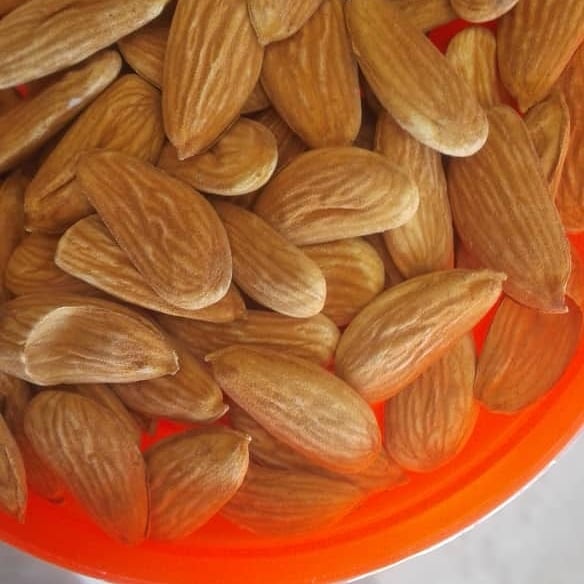
Wholesale buyers increasingly prioritize kernel quality, uniform sizing, food safety compliance, and competitive pricing, making almond kernels one of the most actively traded nut commodities worldwide.
Understanding Almond Kernels in Wholesale Trade (H2)
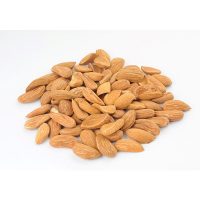
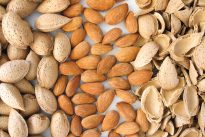
An almond kernel refers to the edible inner seed obtained after removing the almond shell. In wholesale markets, almond kernels are sold based on size calibration, moisture content, oil stability, and defect tolerance.
| The global almond kernel wholesale market has grown rapidly over the past decade, driven by increasing demand for plant-based nutrition, clean-label ingredients, and value-added food products,An almond kernel refers to the edible inner seed obtained after removing the almond shell. In wholesale markets, almond kernels are sold based on size calibration, moisture content, oil stability, and defect tolerance,Wholesale almond kernels are classified according to international grading systems to ensure transparency and consistency. |
Why Almond Kernels Are Preferred in Wholesale (H3)
-
No shell waste for buyers
-
Reduced logistics and storage volume
-
Faster processing for food manufacturers
-
Standardized grading and pricing
-
Higher value per metric ton compared to in-shell almonds
According to the International Nut and Dried Fruit Council (INC), almond kernels account for the majority of almond trade value globally.
🔗 https://inc.nutfruit.org
“Kernel-level trading allows buyers to optimize cost efficiency and production speed.”
— Global Nut Commodity Analyst
Global Almond Kernel Market Statistics (H2)
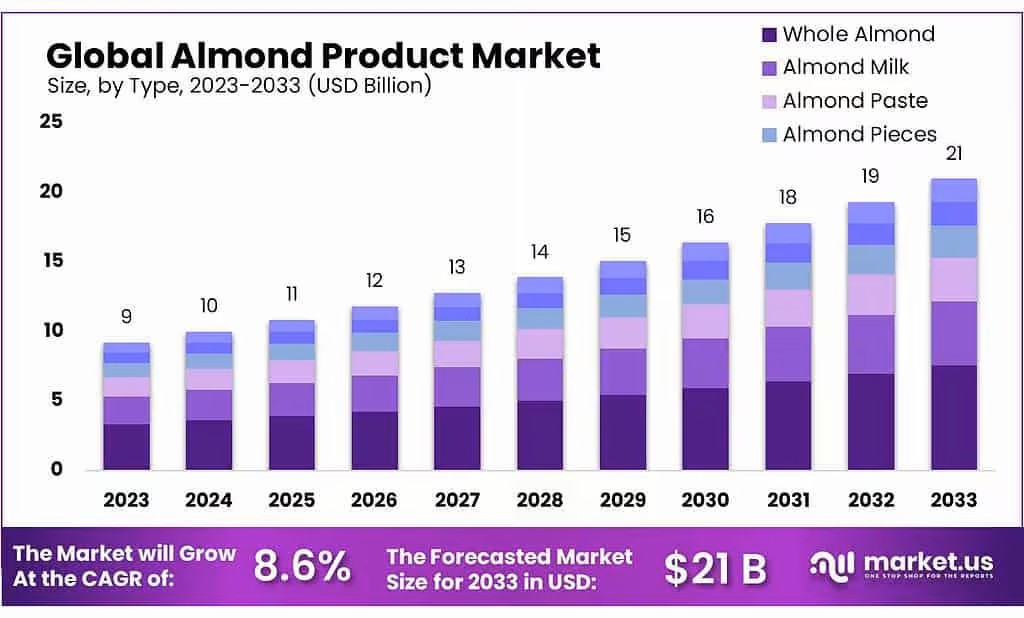
The almond kernel wholesale market is supported by strong consumption trends in health foods, confectionery, and plant-based alternatives.
Key Market Statistics (H3)
-
Global almond market value exceeds USD 10 billion annually
-
Almond kernels represent over 65% of total almond trade value
-
Asia and the Middle East show double-digit import growth
-
Bakery and snack sectors remain the largest buyers
According to data published by the Food and Agriculture Organization (FAO), almond production and kernel exports continue to rise due to global dietary shifts.
🔗 https://www.fao.org
Almond Kernel Grades and Specifications (H2)
Wholesale almond kernels are classified according to international grading systems to ensure transparency and consistency.
Common Wholesale Specifications (H3)
-
Size count (kernels per ounce or per pound)
-
Moisture content (typically below 6%)
-
Defect ratio (broken, chipped, insect-damaged)
-
Color uniformity
-
Aflatoxin compliance
High-quality almond kernels exhibit firm texture, low free fatty acid levels, and high oxidative stability, which are critical for extended shelf life.
The Codex Alimentarius Commission provides global food safety benchmarks for nut kernels.
🔗 https://www.fao.org/fao-who-codexalimentarius
Industrial Applications of Almond Kernel Wholesale (H2)
Almond kernels are among the most versatile raw materials in the food and nutraceutical industries.
Major Commercial Uses (H3)
-
Bakery and confectionery fillings
-
Almond butter and paste production
-
Plant-based almond milk
-
Protein bars and functional snacks
-
Cold-pressed almond oil
-
Cosmetic and pharmaceutical formulations
Due to their high monounsaturated fat content, almond kernels perform exceptionally well in thermal processing and emulsification.
Nutritional and Functional Value of Almond Kernels (H2)
Wholesale buyers targeting health-conscious consumers value almond kernels for their nutrient density and functional benefits.
Nutritional Profile per 100g (Approx.) (H3)
-
Protein: ~21 g
-
Healthy fats: ~49 g (oleic acid dominant)
-
Dietary fiber: ~12 g
-
Vitamin E: ~25 mg
-
Magnesium, Calcium, Phosphorus
Research indexed by the National Institutes of Health (NIH) confirms almonds’ role in cardiovascular health, metabolic regulation, and satiety control.
🔗 https://www.ncbi.nlm.nih.gov
“Almond kernels are one of the most complete plant-based ingredients available to food manufacturers.”
— Journal of Nutrition
Packaging and Logistics in Almond Kernel Wholesale (H2)
Efficient packaging is critical in wholesale almond kernel trade to preserve quality during long-distance shipping.
Common Wholesale Packaging Options (H3)
-
10 kg and 25 kg vacuum-sealed cartons
-
Nitrogen-flushed polyethylene liners
-
Food-grade polypropylene bags
-
Palletized export cartons
Proper packaging protects against oxidation, moisture absorption, and microbial contamination, ensuring kernels arrive in optimal condition.
Export Standards and Certifications (H2)
Reputable almond kernel wholesalers comply with international food safety and quality standards, enabling access to regulated markets.
Common Certifications (H3)
-
HACCP (Hazard Analysis and Critical Control Points)
-
ISO 22000 Food Safety Management
-
Phytosanitary Certification
-
Certificate of Origin
-
Aflatoxin Test Reports
These standards are essential for entry into EU, GCC, and Asian markets.
Wholesale Buyers and Key Import Markets (H2)
Almond kernel wholesale buyers include:
Main Buyer Segments (H3)
-
Food manufacturers
-
Nut processors and roasters
-
Private-label snack brands
-
Bakery chains
-
Distributors and trading companies
Major importing regions include:
-
European Union
-
India
-
China
-
Middle East
-
Russia
According to the International Trade Centre (ITC), almond kernels are among the top-traded edible nuts by value.
🔗 https://www.trademap.org
Sustainability and Ethical Sourcing (H2)
Sustainability has become a decisive factor in wholesale nut sourcing.
Advantages of Almond Kernels (H3)
-
Long shelf life reduces food waste
-
Efficient transport due to high value-to-weight ratio
-
Compatibility with dry-farming regions
-
Increasing adoption of traceability systems
These attributes align with ESG requirements and modern procurement policies.
Why Wholesale Buyers Choose Reliable Almond Kernel Suppliers (H2)
Experienced wholesalers differentiate themselves through quality control, consistency, and service flexibility.
Key Buyer Benefits (H3)
-
Stable year-round supply
-
Custom grading and sizing
-
Competitive bulk pricing
-
Private-label readiness
-
Transparent documentation
“In almond kernel wholesale, consistency matters more than volume alone.”
— International Food Import Consultant
Trusted Industry Resources for Almond Kernel Trade (H2)
Wholesale buyers and traders rely on the following authoritative resources:
-
Food and Agriculture Organization (FAO)
🔗 https://www.fao.org -
International Nut & Dried Fruit Council (INC)
🔗 https://inc.nutfruit.org -
Codex Alimentarius Commission
🔗 https://www.fao.org/fao-who-codexalimentarius -
International Trade Centre (ITC Trade Map)
🔗 https://www.trademap.org
Conclusion: Almond Kernel Wholesale as a Strategic Business Choice (H2)
The almond kernel wholesale market offers strong margins, consistent demand, and global scalability. With applications across food, health, and cosmetic industries, almond kernels remain one of the most reliable and profitable nut commodities.
For wholesalers, distributors, and manufacturers seeking quality, safety, and long-term growth, almond kernels represent a smart and future-proof investment in the global food trade.
All Type Of Almonds
-
Mamara Almond Grade A Special wholesale price , analysis , sale offer
Mamara Almond : The almond is technically the seed of the fruit of the almond tree which is oval in shape, and buttery in taste. As is one of the most popular nuts, almond is not only well known in…

 3 kind raisin